
Top-Rated Chicago
Personal Injury Attorneys
Personal Injury Attorneys
Committed to Maximizing the Value of Your Case



At Chicago Injury Center, our Chicago birth injury lawyer team is committed to helping families recover after preventable harm during labor and delivery. With local experience in courts like the Circuit Court of Cook County and extensive knowledge of hospital procedures, we fight for compensation that helps secure your child’s future and long-term care needs.
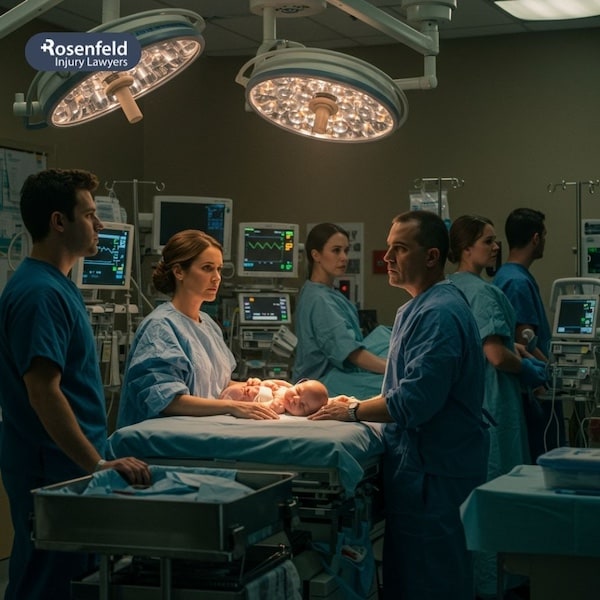
At Chicago Injury Center, our team of experienced birth injury attorneys has successfully handled numerous birth injury cases involving medical negligence during labor and delivery.
$11,250,000 Settlement – Baby Ava experienced prolonged oxygen deprivation during labor due to delayed intervention by the delivery team. The lack of timely action led to abnormal brain development and a diagnosis of cerebral palsy, requiring lifelong medical care and supportive services.
$3,000,000 Settlement – Lily visited the emergency room with signs of fetal distress, but hospital staff failed to act. Her baby was stillborn hours later. The family pursued a wrongful death claim, resulting in a $3 million settlement for medical negligence and emotional loss.
$1,730,000 Settlement – During Ethan’s birth, his shoulder became lodged behind the mother’s pubic bone. The OB/GYN applied excessive force, causing permanent brachial plexus damage. The settlement reflected the lifelong impact of limited arm function and the provider’s deviation from delivery standards.
Our top-rated Chicago birth injury lawyers have a proven track record of success in complex medical malpractice cases, including multimillion-dollar verdicts and settlements. Backed by decades of experience and recognition from Super Lawyers and the Million Dollar Advocates Forum, we’re trusted advocates for families seeking justice after a child’s birth injury caused by negligence.
A birth injury is physical or neurological harm a baby or mother suffers before, during, or shortly after delivery. These injuries often result from medical negligence and can include brain damage, nerve injuries, fractures, or oxygen deprivation during the birthing process.
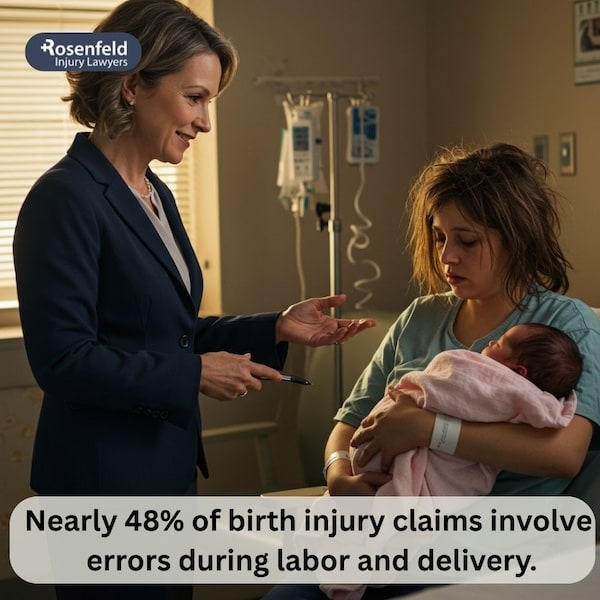
At Chicago Injury Center, we represent families facing the overwhelming effects of medical negligence during labor and delivery. Our top-rated Chicago medical malpractice attorneys work with parents to pursue claims involving both the child and the mother.
Birth injury cases are emotionally complex and often require long-term care and significant financial support. We bring experience and dedication to every case to help secure the resources families need to move forward.
Infant birth injuries often occur during labor or delivery and may result from a lack of oxygen, excessive force, delayed intervention, or improper use of delivery tools. Our Chicago child injury lawyer team has handled cases of injuries that can range from temporary complications like low birth weight to lifelong conditions that impact a child’s physical and cognitive development.
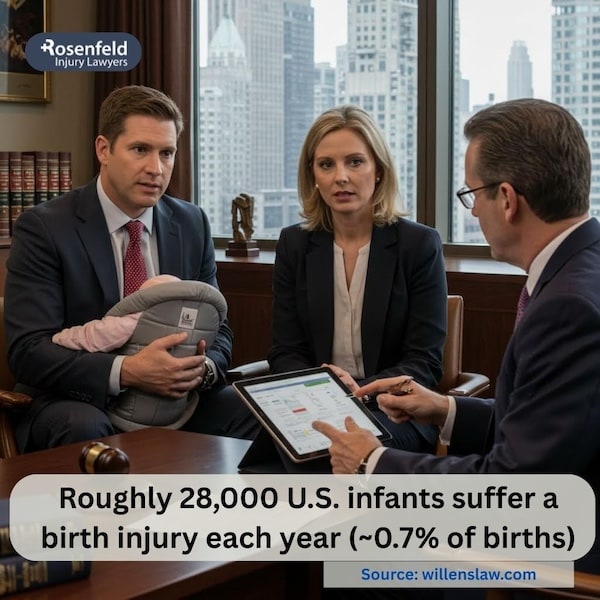
While much attention is focused on the baby, injuries to expectant mothers can also be life-altering and are sometimes overlooked in hospital settings. Our attorneys pursue compensation for mothers harmed by medical negligence before, during, or after delivery.
A birth injury occurs during labor or delivery, often due to physical trauma or medical negligence, and may involve preventable conditions. A birth defect, by contrast, typically develops during pregnancy due to genetic, environmental, or unknown factors. Unlike injuries, most birth defects are not caused by medical errors during the birthing process.
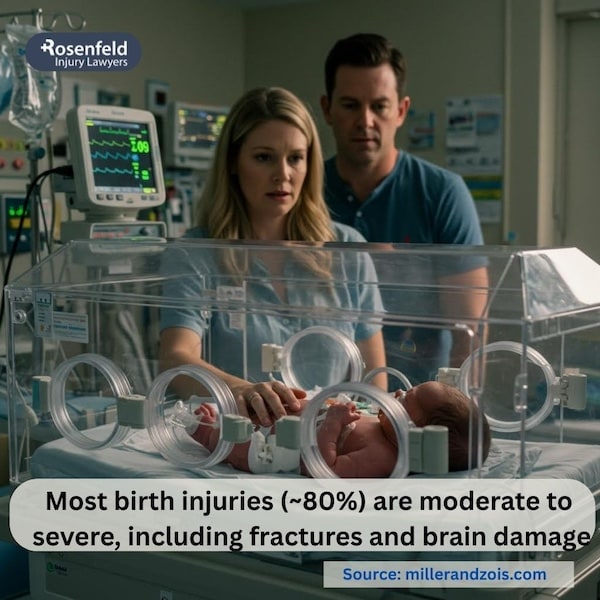
Birth trauma can result from a combination of medical negligence, systemic hospital failures, and naturally occurring complications that aren’t properly addressed. While some birth injuries are unavoidable, many are preventable with timely medical intervention and adherence to established standards of care.
Errors in medical judgment or action during pregnancy, labor, or delivery are a leading cause of preventable birth injuries. These cases involve healthcare providers who fail to meet accepted standards, leading to serious harm.
Delayed or failed C-section: When providers fail to perform a C-section in time despite labor complications, the baby can suffer brain damage or death.
Improper use of forceps or vacuum extractors: These tools, when used without precision or care, can cause skull fractures, facial nerve damage, or brachial plexus injuries.
Misuse of Pitocin or unsafe labor induction: Overstimulation of contractions can deprive the baby of oxygen and strain the uterus, endangering both mother and child.
Poor response to fetal distress: A failure to monitor or act on abnormal heart rate patterns can result in severe complications like cerebral palsy or stillbirth.
Prescription or medication errors: Administering the wrong medication or incorrect dosages can cause dangerous side effects during delivery.
Anesthesia mistakes: Faulty epidural or spinal block procedures may result in maternal harm or delay urgent procedures like emergency C-sections.
Misdiagnosis of maternal or fetal conditions: Missing signs of preeclampsia, gestational diabetes, or infections may leave both the mother and baby vulnerable during delivery.
Negligent postnatal care: Delays in recognizing and treating complications after birth can lead to long-term injury.
Failure to act on known risk factors: Conditions like macrosomia (large baby), breech positioning, or advanced maternal age require special attention and planning. Ignoring these risks can be life-altering.
Inadequate consent or poor communication during high-risk deliveries: Patients who aren’t fully informed of their delivery risks or options may be unable to advocate for themselves in time-sensitive situations.
Institutional issues can be just as harmful as provider error. Systemic problems in a hospital’s labor and delivery unit can undermine patient safety, even when individual providers are acting in good faith.
Understaffed labor & delivery units: Fewer staff members mean delays in care, reduced monitoring, and higher error rates.
Fatigued or overworked staff: Exhaustion leads to judgment lapses, poor communication, and slower response times.
Unsanitary or unsafe birthing conditions: Infections and birth complications may stem from poorly maintained facilities or non-sterile equipment.
No emergency protocols in place: Without proper procedures, staff may not know how to act quickly when emergencies arise.
Poor team communication or handoffs: Missed or misunderstood information between shifts or departments can delay critical care.
Missing or incomplete prenatal documentation: Lack of access to a patient’s history limits the team’s ability to make safe decisions during labor.
Delayed access to NICU or emergency surgery: Some facilities may lack immediate availability of life-saving services, increasing the risk of poor outcomes.

Not all complications stem from negligence. Certain risk factors are inherent to the labor and delivery process, but they still require skilled management. Failing to prepare for or respond appropriately to these situations can result in serious injury.
Shoulder dystocia: When the baby’s shoulder gets stuck behind the mother’s pelvic bone, it requires specific maneuvers to prevent nerve damage.
Breech birth: Vaginal delivery of a baby positioned feet-first or bottom-first increases the risk of trauma unless handled with care or converted to a C-section.
Umbilical cord prolapse or compression: A cord that slips into the birth canal before the baby or becomes compressed can restrict oxygen supply, demanding immediate intervention.
Placental abruption: When the placenta separates from the uterine wall prematurely, both mother and baby face severe blood loss.
Preeclampsia or eclampsia: These hypertensive disorders can lead to seizures, stroke, or organ damage if untreated.
Premature labor: Preterm babies are more vulnerable to respiratory and neurological complications.
Fetal macrosomia: A baby that is significantly larger than average can create challenges during vaginal delivery and raise the risk of shoulder dystocia.
Cephalopelvic disproportion (CPD): When the baby’s head is too large for the mother’s pelvis, delivery often requires surgical intervention.
Meconium aspiration: A newborn inhaling meconium-stained amniotic fluid can suffer breathing problems and infection.
Multiple births (twins/triplets): Carrying more than one fetus increases the likelihood of early labor and delivery complications.
Maternal infections: Conditions like group B strep (GBS), sepsis, or untreated UTIs can affect the baby if not caught and treated in time.
Maternal diabetes or cardiac conditions: Poorly managed chronic illnesses increase risks for both mother and child.
In Chicago, families pursuing a birth injury claim may recover compensation for both economic and non-economic damages. This can include past and future medical expenses, costs of ongoing medical treatment or therapy, special education needs, and lost earning potential for the child.
Non-economic damages may address the child’s pain and suffering, permanent disability, and loss of quality of life. In some birth injury cases involving gross negligence, punitive damages may also be awarded. Every case depends on the extent of injury and long-term impact.
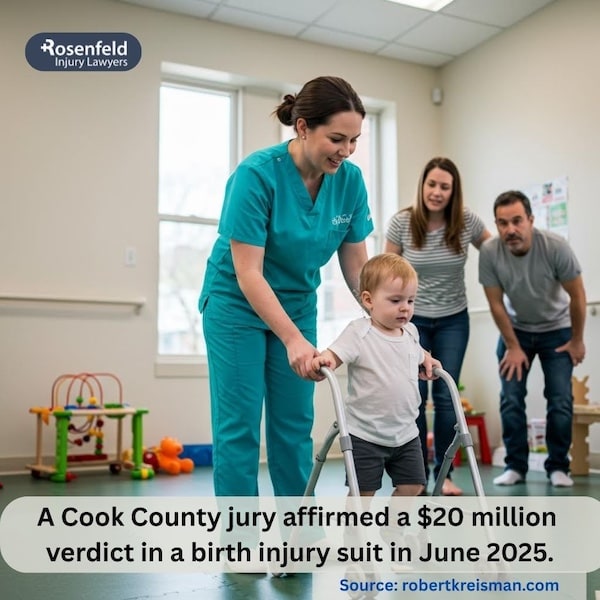
Even with a successful birth injury settlement, families may face ongoing costs not fully covered by compensation. Fortunately, Illinois and federal programs offer additional support.
These include the Division of Specialized Care for Children, Social Security benefits, UnitedHealthcare Children’s Foundation grants, and special needs trusts—each designed to ease financial strain while ensuring continued access to essential care and services.
Building a strong birth injury claim takes thorough documentation. At Chicago Injury Center, we help families gather critical records to prove medical negligence and secure compensation. Key documents include prenatal records, birth notes, NICU summaries, and the child’s medical treatment history.
We also review any postnatal records from the mother. Expert medical opinions and internal hospital investigations can help show where care fell short. Financial paperwork like hospital bills, treatment costs, and lost income records support damages claims. Personal materials—such as journals or photos—can demonstrate how the injury affects daily life.
Insurance communications and any previous legal correspondence also help strengthen the case. Having these materials ready gives our birth injury team the tools to advocate effectively on your child’s behalf.
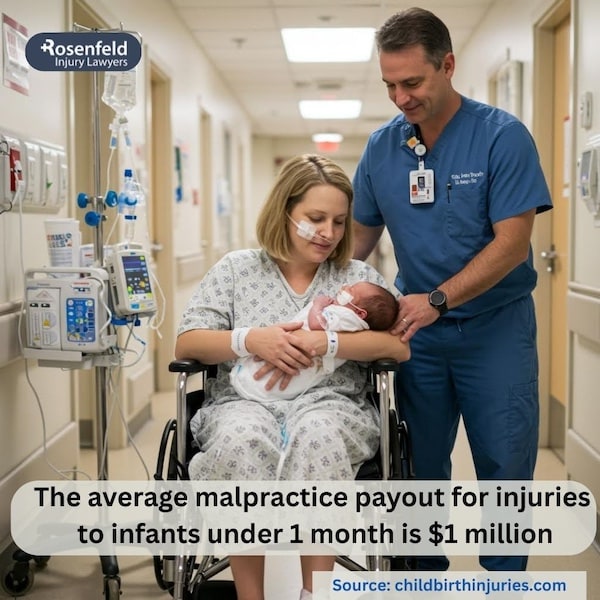
According to case data at Law.com, the average birth injury settlement in Chicago is $22,228,004, while the median settlement is $12.5 million. Payouts range widely—from $400,000 to over $100 million—depending on the severity of the injury and the long-term impact on the child and family.
Several factors influence the value of a birth injury claim, including the extent of permanent disability, projected medical and caregiving costs, and whether the injury was caused by apparent medical negligence. Cases involving cerebral palsy, brain damage, or loss of life typically result in higher compensation due to the lifelong care needs and emotional toll on the family.
$75.8M Verdict for Twin’s Traumatic Delivery at University of Chicago Medical Center
Hannah Housen suffered brain damage, brachial plexus injury, and shoulder fractures after a mismanaged breech delivery. Her family claimed doctors used excessive force and misidentified her hand as a foot. Multiple surgeries, cerebral palsy, and lifelong impairments followed.
The jury found the hospital and doctors negligent for unnecessary and improperly supervised delivery maneuvers. Hannah requires 24/7 care. The jury awarded $75,859,000 for medical bills, lost earnings, pain, disfigurement, and emotional distress.
$53M Verdict for Delayed C-Section Leading to Cerebral Palsy
Isaiah Ewing was born with severe brain damage after the University of Chicago Medical Center delayed a C-section despite signs of fetal distress. His mother was induced with medication despite concerning monitor readings. Isaiah was diagnosed with CP and now requires around-the-clock care.
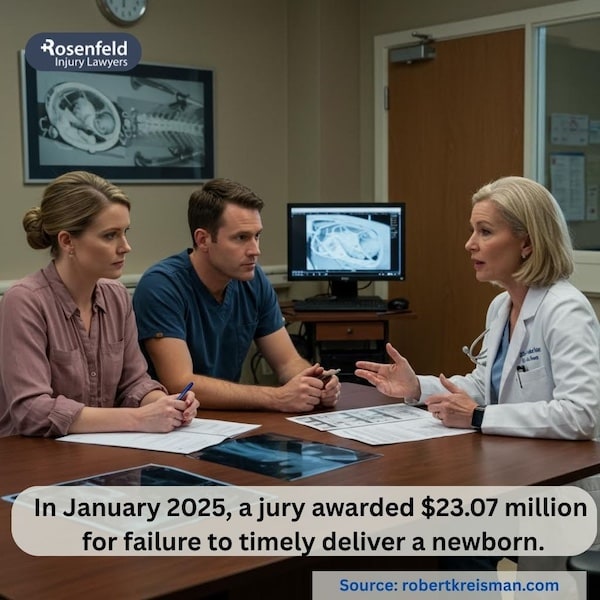
Experts testified he would have been unharmed with earlier delivery. The jury sided with the plaintiffs, awarding $53 million in damages for medical care, future supervision, pain, suffering, and lost earning capacity.
$40M Birth Injury Verdict After Delayed Emergency Delivery
Kiera Campbell was born with cerebral palsy and severe cognitive impairments after Sarah Bush Lincoln Health Center delayed a necessary C-section despite clear signs of fetal distress. Her mother arrived with placental abruption symptoms, but staff failed to act promptly.
Experts said better communication between the nurse and the physician could have prevented the injury. The jury held the nurse and hospital liable, awarding $40 million for future disability, lost earnings, emotional distress, and the cost of lifelong care.
Birth injury cases are complex and emotionally charged, often requiring in-depth medical review and testimony to prove negligence. Hospitals and providers typically have strong legal teams and insurers working to minimize liability.
In Chicago, these claims are often filed in the Circuit Court of Cook County, where procedural requirements and expert affidavits can heavily impact the outcome. A skilled birth injury attorney understands local court expectations and how to build a strong case to hold medical providers accountable for avoidable harm.
According to birth injury statistics by the Chicago Department of Public Health (CDPH), 116 women lost their lives during pregnancy or within a year following delivery, reflecting a pregnancy-related mortality rate of 48.6 per 100,000 live births. Notably, 78% of these deaths occurred after childbirth—28% within six weeks and 50% more than 42 days postpartum.
In 2020, Illinois recorded 737 infant deaths. Placental, cord, or membrane issues were responsible for 37 deaths—these are often linked to missed warning signs or delayed C-sections, and in some cases, may reflect lapses in medical care. Birth trauma rate statistics reveal bacterial sepsis of the newborn led to 24 deaths, suggesting potential failures in infection control or delayed diagnosis.
Intrauterine hypoxia and birth asphyxia, causes closely tied to labor and delivery management, resulted in 14 deaths, while neonatal hemorrhage, often related to premature or traumatic births, accounted for 12 deaths.
Many of these cases raise questions about whether early intervention or better hospital protocols could have prevented the outcome.
Birth injury claims in Chicago are primarily governed by 735 ILCS 5/2-622, which requires a certificate of merit from a medical professional when filing a claim. Parents may also bring claims under the Illinois Wrongful Death Act if the injury results in the infant’s death.
A key case, Clark v. Children’s Memorial Hospital, 2011 IL 108656, clarified how expert testimony is evaluated in medical negligence lawsuits. This decision continues to influence how birth injury litigation proceeds in Cook County and across Illinois.
In Chicago, birth injury lawsuits are governed by Illinois’ medical malpractice statute of limitations. Under 735 ILCS 5/13-212, parents generally have eight years from the date of the injury to file a claim on behalf of a minor.
However, if the injury isn’t discovered right away, the time may be extended under the discovery rule. It’s essential to act quickly, as delays can limit your legal options or bar your claim entirely. Always consult a Chicago personal injury attorney early to protect your rights.
In Chicago, legal liability for birth injuries can extend to multiple parties depending on how the injury occurred. Commonly, obstetricians and labor and delivery doctors are held responsible for errors like delayed C-sections or improper use of delivery tools.
Nurses may be liable if they failed to report complications, misread monitors, or didn’t follow hospital protocols. Hospitals and birthing centers can also be liable for system-wide issues such as understaffing, poor supervision of residents, or lack of emergency resources. Anesthesiologists may face claims if pain medications or anesthesia were improperly administered.
In rare cases, pharmaceutical companies or medical device manufacturers could be responsible if defective products contributed to the injury.
In birth injury cases, defendants often claim the injury was due to a preexisting condition, such as a genetic disorder or prenatal infection, rather than medical negligence. We counter this by presenting expert medical testimony and fetal monitoring data showing the injury occurred during labor or delivery.
Another common defense is that all actions taken were within the standard of care. We challenge this by showing how proper protocols—like timely C-sections or adequate supervision—were ignored. Some hospitals argue that the child’s condition would have occurred regardless of intervention. We respond with evidence-based timelines and expert analysis linking the injury directly to preventable actions or delays.
Our legal team prepares thoroughly to disprove these defenses and protect the injured child’s future.
To strengthen your birth injury case in Chicago, acting quickly and documenting everything is key. Start by requesting complete copies of your medical records from prenatal visits through labor, delivery, and postnatal care. These records can reveal signs of negligence or delayed intervention.
If your child shows signs of injury—such as seizures, low muscle tone, or delayed milestones—seek evaluation from a pediatric neurologist or specialist as soon as possible. Keeping a written record of medical appointments, diagnoses, and symptoms also helps establish a timeline.
Photograph visible injuries, and save all bills related to medical care, therapy, and assistive devices. Don’t speak with hospital administrators or insurance companies without legal guidance. Their goal is often to limit liability, not support your family’s recovery.
Contact an experienced attorney early so they can preserve key evidence, consult with medical experts, and guide you on your legal rights. Early action can improve your ability to seek full compensation for your child’s long-term needs.
A birth injury lawyer provides critical support for families from the start of a case through resolution.
First, we review your medical records with independent experts to determine whether medical negligence occurred. We collect evidence, consult with specialists, and build a clear picture of what went wrong during pregnancy, labor, or delivery. We will handle all communication with insurance companies and the hospital’s legal team, protecting you from low settlement offers or pressure tactics.
As the case progresses, we will file your claim, manage court deadlines, and represent your interests in settlement negotiations or trial. We also work to calculate the full extent of damages, covering past and future medical bills, loss of earning potential, and long-term care.
Many birth injuries are preventable with proper monitoring and timely medical intervention. If your healthcare provider failed to act on signs of fetal distress, delayed a necessary C-section, or used excessive force during delivery, the injury may be linked to medical negligence.
To establish liability, you must show that the doctor or healthcare provider breached their duty of care and that breach directly caused the birth injury. Evidence includes prenatal records, labor and delivery notes, fetal monitoring strips, expert testimony, and imaging reports.
Our Chicago birth injury lawyers work on a contingency fee basis. This means you don’t pay anything upfront. We only get paid if they win your case or secure a settlement. The fee is typically a percentage of the recovery and will be discussed in your initial consultation. This structure allows families to pursue justice without the burden of legal bills during an already difficult time.
In most cases, a parent or legal guardian can file a birth injury claim on behalf of the injured child. If the injury leads to a fatality, a claim may be filed by the personal representative of the child’s estate. A birth injury lawyer can help you understand your rights and ensure that the appropriate parties are named in the claim according to Illinois law.
Yes. Illinois law includes a discovery rule for minors. If a birth injury isn’t immediately known, you may still have time to file once the condition is identified. Generally, parents have up to eight years after the child’s birth to take legal action, though circumstances vary. It’s best to consult a birth injury lawyer as soon as you suspect harm.
Yes. Birth injury claims fall under the broader category of medical malpractice. These cases involve allegations that a healthcare provider’s negligent actions during pregnancy, labor, delivery, or postnatal care directly caused preventable harm. To succeed, your lawyer must prove that the standard of care was breached and that this breach resulted in injury to the mother or child.
A medical malpractice lawsuit can take anywhere from several months to a few years. Factors influencing the timeline include the complexity of medical evidence, the severity of the injury, the willingness of the hospital or insurer to settle, and whether the case goes to trial.
Negligence during childbirth occurs when healthcare providers fail to uphold accepted standards of care, resulting in harm. This might include ignoring signs of fetal distress, delaying a necessary C-section, misusing forceps or a vacuum extractor, or providing improper medication.
If a medical professional’s negligence leads to injury, a medical malpractice claim may be filed against the responsible provider or facility.
A traumatic birth injury is physical harm sustained during labor or delivery due to mechanical force, oxygen deprivation, or poor decision-making by medical staff. Common examples include brachial plexus injuries, brain damage, skull fractures, and spinal cord trauma. These injuries can result from improper use of instruments, failure to monitor fetal distress, or delayed interventions during complicated deliveries.
Spinal cord injuries at birth are rare but devastating. They can be caused by excessive traction during delivery, improper use of forceps or vacuums, or breech extractions. These injuries may result in permanent paralysis or limited motor function. A thorough review of delivery records and imaging can help determine whether the injury was caused by an avoidable medical error.
Medical records provide the foundation of any birth injury claim. They detail prenatal care, labor progress, fetal monitoring, medications used, and provider actions during delivery. Lawyers and medical experts analyze these records to identify deviations from the standard of care. Missing, altered, or inconsistent entries may also raise questions about the adequacy of treatment or attempts to conceal negligence.
Yes. Improper delivery techniques can lead to serious, sometimes lifelong injuries. Forceful pulling, incorrect use of delivery tools, or failing to manage shoulder dystocia properly can cause nerve damage, broken bones, or brain injury. In these cases, a birth injury lawyer can help hold the healthcare providers accountable for preventable harm.
Yes. Erb’s palsy is often caused by excessive stretching or tearing of the brachial plexus nerves during delivery, usually when the baby’s shoulder becomes stuck behind the mother’s pubic bone. If improper technique or excessive force contributed to the injury, it may be grounds for a birth injury claim under Illinois medical malpractice laws.
If a baby dies as a result of a preventable birth injury, the family may take legal action with the help of a Chicago fatal injury attorney. Illinois law allows compensation for medical expenses, funeral costs, emotional suffering, and loss of companionship. A birth injury attorney from our team can guide you through this legal process while offering compassionate support during an incredibly difficult time.
If your baby was harmed during pregnancy, labor, or delivery, you deserve answers and support. Chicago Injury Center helps families hold healthcare providers accountable and seek financial recovery for medical care, therapy, and long-term needs.
We offer free consultations and work on a contingency fee basis, so you won’t pay anything unless we secure compensation. Contact us to speak with a trusted attorney about your child’s case.
Content reviewed by Chicago personal injury lawyer Jonathan Rosenfeld of Rosenfeld Injury Lawyers LLC, who holds negligent individuals, corporations, and institutions accountable to secure justice and compensation for injured victims and their families, and is a trial lawyer recognized by Super Lawyers, the National Law Journal, and the National Trial Lawyers organization.