
Top-Rated Chicago
Personal Injury Attorneys
Personal Injury Attorneys
Committed to Maximizing the Value of Your Case



At Chicago Injury Center, our Chicago nursing home abuse lawyer team stands up for elderly and disabled residents who have suffered abuse or neglect in nursing homes and assisted living facilities across the city and throughout Illinois. With years of experience handling complex elder abuse cases, we’ve recovered significant compensation for victims and their families, holding negligent nursing home facilities and staff accountable.

$3,000,000 Settlement – James was admitted to a Chicago nursing home after a routine hip replacement. Within a month, he developed deep bed sores that became infected. His wife, Patricia, contacted our office after staff failed to transfer him to a hospital. Internal medical records revealed long delays in treatment, which helped us secure a strong result.
$2,150,000 Settlement – Ruth passed away at an Illinois nursing home after untreated pressure ulcers led to fatal sepsis. Her daughter, Angela, grew alarmed by her mother’s rapid decline. Facility logs showed inconsistent wound care and understaffing, both of which helped us demonstrate clear misconduct.
$1,500,000 Settlement – After being left unsupervised, Walter, a resident with dementia at a Chicago assisted living facility, accessed an unsecured supply closet and ingested toxic chemicals. His son, Eric, turned to us for answers. The facility’s long-standing safety violations and history of nursing home negligence made accountability possible through a strong settlement.
Families across Illinois turn to Chicago Injury Center when they need a top-rated Chicago nursing home abuse lawyer. Our attorneys have been recognized by Super Lawyers, the Million Dollar Advocates Forum, and have a 10/10 rating on Avvo for their results in elder abuse and neglect cases. We have recovered over $450 million for injured residents, handling each case with dedication.
Physical abuse in a nursing home setting includes hitting, pushing, slapping, or misusing restraints. These acts can lead to broken bones, bruises, or even internal injuries. Our Chicago nursing home abuse attorneys work to hold responsible parties accountable and seek full compensation for the harm inflicted on vulnerable residents.
Emotional abuse involves insulting, yelling, threatening, humiliating, or isolating nursing home patients. Mental abuse may not leave visible marks, but it can profoundly impact a resident’s well-being.
Sexual abuse in nursing homes can include unwanted touching, assault, or coerced acts. Victims may be unable to report the abuse due to mental illness or cognitive decline. Our firm takes swift action to investigate claims, protect other residents, and pursue compensation from both abusers and negligent nursing home facilities.
Nursing home neglect includes failing to meet a resident’s basic needs, such as nutrition, hygiene, medical care, or supervision. It’s one of the most common forms of nursing home misconduct, and can result in malnutrition, infections, untreated injuries, or elopement. We help families pursue legal action to ensure residents receive the care they deserve.
Financial abuse targets residents who may no longer manage their financial affairs. This can involve theft, forgery, coercion, or misuse of funds by staff or outside parties. Our legal team investigates suspected financial abuse and works to recover stolen assets while holding the responsible individuals legally accountable.
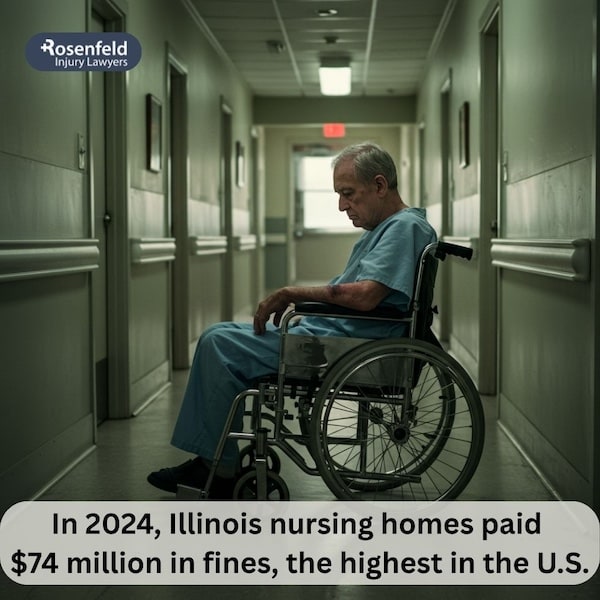
Abuse in Chicago nursing homes stems from preventable issues within the facility itself. Understaffing is one of the leading causes–when there aren’t enough nursing home staff members to meet residents’ needs, basic care is neglected, and the risk of abuse or neglect increases. Poor staff training and inadequate background checks also contribute, allowing unqualified or dangerous individuals to work with vulnerable residents.
Some facilities ignore individualized care plans, leading to missed medications, falls, or worsening medical conditions. High turnover means residents are constantly interacting with unfamiliar staff, reducing accountability. Finally, a general lack of supervision–especially at night–creates conditions where abuse occurs without being reported. These failures put elderly residents at serious risk of harm and demand immediate legal attention.
Victims of nursing home neglect and abuse often suffer serious and sometimes life-threatening injuries. Bed sores–also called pressure ulcers–develop when residents are left in one position too long without movement or care. Broken bones and fractures commonly result from preventable falls, often due to a lack of supervision or unsafe conditions. Malnutrition and dehydration occur when residents aren’t given proper meals or fluids, weakening their immune systems and overall health.
Untreated infections, including those related to pressure sores or poor hygiene, can lead to sepsis or even death. In many cases, residents also experience depression, emotional distress, anxiety, or PTSD from verbal abuse, neglect, or trauma. These injuries are signs of deeper problems within the nursing facility and should never be ignored.
Victims of nursing home abuse in Chicago can recover several types of compensation based on the harm they’ve suffered. This includes coverage for medical bills related to emergency care, hospitalizations, or rehabilitation. If ongoing treatment is needed, future expenses can also be included. Neglect victims may also be awarded damages for pain and suffering, emotional distress, and the overall loss of quality of life resulting from the abuse or neglect.
In tragic cases where a resident dies due to nursing home negligence, surviving family members may file a claim to seek compensation for funeral costs, emotional loss, and other related expenses. An experienced Chicago nursing home abuse lawyer will work to recover the maximum amount under Illinois law.
Based on Law.com’s VerdictSearch, the average payout for nursing home abuse in Chicago is $711,800, with a median of $610,000. Reported case values typically range from $125,000 to $1,898,000.
Several factors can influence the final settlement or verdict:
A knowledgeable Chicago nursing home abuse lawyer can assess these elements to estimate case value.
Joyce Toomey and Larry Austin exposed horrific conditions at Maxwell Manor, a Chicago nursing home housing mostly mentally ill and disabled Medicaid recipients. Residents suffered verbal abuse, sexual assault, and extreme neglect. Despite repeated reports, the facility retaliated by firing both whistleblowers. A federal inspection later confirmed “immediate jeopardy” to nursing home residents. The U.S. joined the case under the False Claims Act, alleging over $500,000 in fraud. A $1.898 million settlement was reached with some defendants; Maxwell Manor and its owner were not part of the settlement.
Frank Sue, a 78-year-old quadriplegic, died after developing seven stage-IV pressure ulcers at Alden Naperville Rehabilitation & Healthcare. Staff and doctors failed to monitor his condition, coordinate care, or provide basic treatment, including a needed gel mattress. His family claimed this nursing home neglect caused severe pain and contributed to his death. The case settled for $1 million–$665,000 from the nursing home and $335,000 from the attending physician, with no admission of fault.
Antonio Mares, 57, choked to death at Center Home for Hispanic Elderly after staff left him unsupervised during dinner, despite a physician’s order requiring a mechanical-soft diet and one-on-one assistance. A nurse’s aide attempted to help but failed, and no other staff responded to the call light. Mares’ daughter sued for negligence, understaffing, and failure to follow care orders. The case settled before trial for $875K, including a confidential amount from a food supplier. The facility denied wrongdoing but did not contest liability.
Cases involving nursing home abuse are complex and often challenging to prove. Victims may be unable to speak for themselves, and nursing home facilities usually deny wrongdoing or hide evidence. These cases require gathering detailed medical records, identifying violations of the care plan, and proving neglect or abuse under Illinois law.
You’ll also need to understand how to work with–or around–the Illinois Department of Public Health (IDPH), which oversees nursing home standards but doesn’t always enforce accountability. Many facilities are backed by large corporations and aggressive defense firms. To succeed in a lawsuit, you need a lawyer who understands how to present cases in the Cook County Circuit Court and other local venues, and who can stand up to corporate legal teams on your behalf.
Nursing home abuse and neglect are far more common in Chicago than many families realize. According to Medicare, out of 221 nursing homes located in or around Chicago, 137, or 62%, have received an overall rating of below or much below average.
Many are currently part of the Special Focus Facility (SFF) program, a federal list reserved for nursing homes with a pattern of serious safety violations and persistent substandard care. Facilities in the SFF program are closely monitored due to repeated failures to protect residents.
The Nursing Home Reform Act of 1987, part of the Omnibus Budget Reconciliation Act (OBRA), sets nationwide standards for nursing home care, requiring facilities to provide services that maintain or improve residents’ physical and mental health. It also establishes enforceable residents’ rights, forming the foundation for many nursing home abuse lawsuits when facilities fail to meet these obligations.
In Harris v. Manor Healthcare Corp., 111 Ill. 2d 350 (1986), the Illinois Supreme Court confirmed that residents and their families have a private cause of action under the Nursing Home Reform Act. This means they may sue the facility directly in civil court for violations of rights such as safety, dignity, and adequate care. Families no longer have to rely solely on the IDPH for enforcement, but can seek damages through civil litigation when a nursing home resident suffers abuse.
The Elder Justice Act of 2010 was the first comprehensive federal law addressing elder abuse, neglect, and exploitation. It provides funding for investigations, training, and adult protective services. Evidence gathered under this law may help strengthen claims brought by victims or families.
The Older Americans Act created vital services for seniors, including the Long-Term Care Ombudsman Program. Ombudsmen investigate complaints of negligence and advocate for residents’ rights. While the Act itself does not authorize lawsuits, its programs provide critical documentation and advocacy resources that can support nursing home abuse lawsuits in Illinois.
The Illinois Nursing Home Care Act (210 ILCS 45/) is one of the strongest state laws protecting Illinois nursing home residents. It establishes a bill of rights, including the right to safe living conditions, proper medical care, and freedom from abuse. Families can pursue civil lawsuits under this statute, seeking damages for misconduct.
720 ILCS 5/12-4.4a makes criminal abuse or neglect of long-term care residents a felony. Staff members who cause physical abuse, deny essential medical treatment, or recklessly endanger residents may face prosecution. In addition to criminal charges, victims and families may file civil cases seeking compensation for the harm suffered.
210 ILCS 30/ requires mandatory reporting of suspected abuse or neglect in long-term care settings. Healthcare workers, administrators, and staff must report to the nursing home hotline or state authorities. Reports generated under this statute often serve as vital evidence in nursing home neglect cases filed in Cook County Circuit Court.
The Adult Protective Services Act (320 ILCS 20/) provides statewide protections for any elderly person or vulnerable adult facing abuse, neglect, or exploitation. It authorizes investigations, emergency interventions, and protective services. While broader than nursing homes alone, it strengthens claims involving financial abuse or home abuse and neglect in Illinois residential care facilities.
Chicago Municipal Code (2-50-090 et seq.) supports local programs to prevent nursing home abuse and neglect, emphasizing timely reporting and intervention. These initiatives supplement state and federal laws by funding community outreach, awareness campaigns, and oversight programs. Families can use these local protections alongside lawsuits filed by a Chicago nursing home attorney.
Under 735 ILCS 5/13-202, victims of nursing home abuse generally have two years from the date of injury to file a lawsuit. If the abuse wasn’t discovered right away, Illinois’ tolling provisions allow the deadline to begin when the harm was reasonably identified.
The Illinois Wrongful Death Act (740 ILCS 180/) allows family members to bring a lawsuit when a nursing home resident dies due to abuse or neglect. Claims must typically be filed within two years of the death, ensuring survivors have the opportunity to recover damages for their loss.
In Chicago, liability for nursing home abuse can extend to multiple parties. The nursing facility or corporation may be responsible for systemic negligence, such as understaffing or poor policies. Individual staff members can face liability for acts of physical abuse, emotional abuse, or neglect.
Administrators may be held accountable for negligent hiring, inadequate training, or ignoring complaints. In some cases, third-party contractors like outside medical providers, therapists, or security companies may also share responsibility when their failures contributed to resident harm.
In Chicago cases involving nursing home abuse, facilities and their insurers often rely on common defenses to avoid liability. They may argue that a resident’s injuries were the result of a pre-existing condition or claim it’s due to the resident’s contributory negligence. Facilities also frequently contend that there is no proximate cause connecting their neglect to the injury, or that they complied with minimum regulatory standards and therefore met their obligations.
Our firm overcomes these defenses by working with respected expert witnesses who can explain how injuries were preventable with proper care. We collect treatment records, staffing schedules, and testimony from family members to build strong cases. By exposing the difference between regulatory compliance and genuine resident safety, we hold facilities accountable and fight for maximum compensation.
If you suspect nursing home abuse in Chicago, taking the proper steps early can significantly strengthen your case. Begin by carefully documenting signs of abuse or neglect, including photographs of injuries, unsafe conditions, or changes in behavior.
Immediately report concerns to the IDPH and Adult Protective Services (APS) for investigation. Preserve all medical records, care plans, and written communications with the facility. Finally, contact a skilled Chicago nursing home abuse lawyer who can protect your rights and pursue compensation.
A skilled Chicago nursing home abuse attorney provides the guidance families need to hold negligent facilities accountable. Our team conducts thorough investigations, interviews witnesses, and reviews treatment records to uncover the truth.
We collaborate with respected medical experts to confirm how abuse or neglect caused harm. We also assist in filing reports with the IDPH or law enforcement. From building strong cases in Cook County Circuit Court to negotiating settlements or going to trial, we fight for maximum compensation.
The nursing home lawyers at our law firm work on a contingency fee basis, meaning you only pay legal fees if compensation is successfully recovered.
Under Illinois law, nursing home patients, their family members, or court-appointed estate representatives may bring a claim.
To report suspected nursing home abuse, call the Illinois Department of Public Health’s Nursing Home Hotline at 1-800-252-4343. Families may also contact Adult Protective Services or local elder abuse prevention programs operated under the Chicago Municipal Code.
Substantial evidence in nursing home abuse cases includes medical records, photographs of injuries or bed sores, testimony from family members or staff, and prior facility violation reports. Documentation showing medication errors, neglect of care plans, or repeated complaints also supports claims.
Abuse refers to the intentional act of harming the resident, including physical abuse, emotional abuse, and sexual abuse. In contrast, neglect refers to the failure to meet a resident’s basic needs, provide necessary treatment, or provide supervision.
If you suspect abuse or neglect in a Chicago nursing home, it’s essential to act quickly to protect your loved one and preserve evidence. At Chicago Injury Center, we offer a free consultation to discuss your case and explain your legal rights. Contact us today to speak with a dedicated Chicago personal injury lawyer.
Content reviewed by Chicago personal injury lawyer Jonathan Rosenfeld of Rosenfeld Injury Lawyers LLC, who holds negligent individuals, corporations, and institutions accountable to secure justice and compensation for injured victims and their families, and is a trial lawyer recognized by Super Lawyers, the National Law Journal, and the National Trial Lawyers organization.